

My Other Publications
My latest WILLs, “What I Listened to Last week” Issue 6.
You can also find my latest AI newsletter here: “Gemini 3.0 💻, Kosmos 🌌, and Why AI Changes Everything ⚪️”
(For books I have read, reviewed, or currently reading, go to the end of the newsletter)
[Talking Points]
👝Dust in the Baggie - Billy Strings
💃🏾Kpanlogo Dance, Ghana.
👨Man walking across the world.
🗝️35 year old lives in 1946.
🇺🇸Where can Americans afford to live solo?
⚽History of world cup match balls.
🎺Asake - Red Bull Symphonic.
🐍Backend Devs are switching to Python.
🫂Why we are getting more stupid.
🩸A New Cancer Blood Test.
➕The Strange Maths that predicts almost anything.
🇦🇫Public Execution in Afghanistan.
🤼♂️John Cena final entrance.
🎵AI generated song that hit #1 on Billboard.
🧗🏽♂️Sisyphus unpacked
[Longer Reads/Watch]
🏚️ End of Progress Against Extreme Poverty
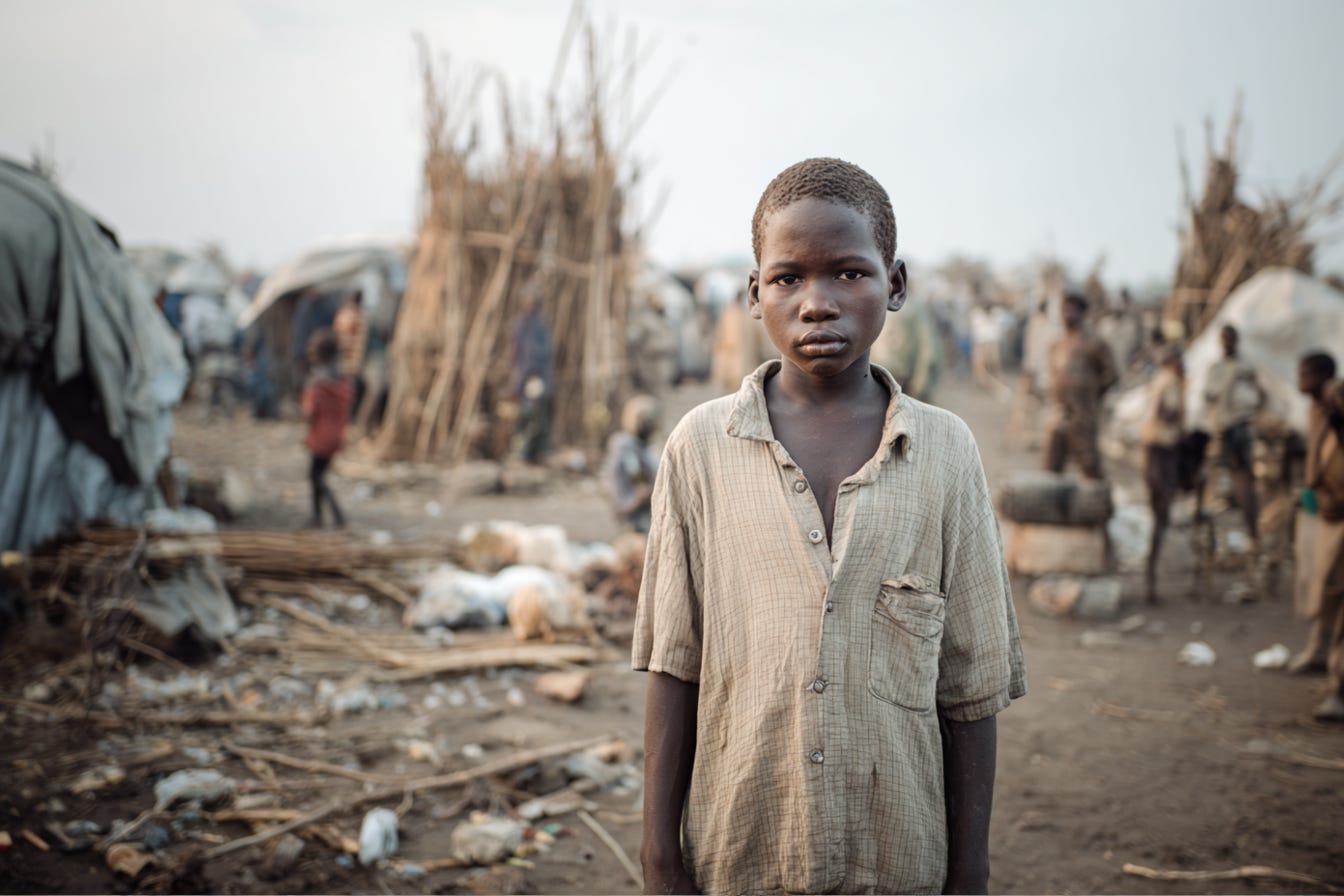
Max Roser argues here that the historic era of rapid global poverty reduction is effectively ending, with progress projected to stall and potentially reverse after 2030, quoting World Bank projections. While past successes were driven by booming economic growth in Asian nations like China and India, the world’s remaining extreme poverty is now concentrated in stagnant Sub-Saharan African economies.

What is different today is that the majority of the world’s poorest people are stuck in economies that have been stagnating for a long time. Consider the case of Madagascar. In the long run, the country has not seen any growth at all: GDP per capita in Madagascar is about the same today as it was in 1950. As a consequence, the number of people in extreme poverty increased in line with the country’s population growth. In richer countries, it is possible to reduce poverty by reducing inequality through redistribution, but a country like Madagascar cannot reduce its share of people in extreme poverty through redistribution. This is because the mean income is lower than the poverty line; if everyone had the same income, everyone would be living in extreme poverty.
The situation is similar in other countries: in the Democratic Republic of Congo, Mozambique, Malawi, Burundi, and the Central African Republic, more than half of the population lives in extreme poverty.
How does this end of reduction of extreme poverty narrative square up with the so-called “AI Abundance”?
I think the conflict, if any exists, partly lies in the gap between digital and physical reality. While AI creates an abundance of intelligence and demonetizes some aspects of services like healthcare, it cannot be eaten, nor does it inherently build the roads, power grids, or sanitation required to lift the “bottom billion” out of destitution. Worse, AI-driven automation threatens to kick away the ladder of low-cost manufacturing that nations like China used to rise, potentially leaving African economies stranded without a growth model. Unless AI specifically solves physical costs (energy, logistics) or drives a shift from local growth to massive global redistribution (perhaps a more cynical read would be something along the lines of ‘recolonization?’), we face a bifurcated future: post-scarcity/abundance for the connected, and continued stagnation for the rest.
🔥 Girard’s Apocalypse.
I have written my fair bit on Girard’s mimetic theory, which you can find here, here, and here. But my analysis of the subject never took any serious theological-political dimension. In this pair of excellent essays from the Cracks in Postmodernity Substack, João Pinheiro da Silva and Mauricio G. Righi explore the existential stakes of René Girard’s “mimetic theory” and how venture capitalist Peter Thiel has adapted it’s insights.
In Part 1, “Girard’s Apocalypse,” the authors outline Girard’s central thesis: that human societies were originally built on the “scapegoat mechanism,” a collective act of violence against an innocent victim that creates temporary peace. However, the authors argue that the Christian revelation of the victim’s innocence has permanently “broken” this mechanism, leaving modern society in an apocalyptic state. Without the ability to vent societal tensions through a shared sacrifice, mimetic rivalry (the imitation of others’ desires) escalates without a natural limit. This creates a global crisis where traditional “restraining” forces (katechon) have failed, leading to a world of total competition and the constant threat of escalating violence that no longer has a religious “safety valve.”
In Part 2, “Thiel’s Diabolical Deviation,” the focus shifts to Peter Thiel, a former student of Girard who, they argued, has “weaponized” these insights. Thiel accepts Girard’s diagnosis of a world in mimetic crisis, but rejects Girard’s theological conclusion of total non-violence and renunciation. Instead, Thiel performs a “diabolical” inversion by using Girardian tools to build a new, technological katechon, a sovereign power capable of restraining the apocalypse through surveillance, monopoly, and political domination. By attempting to re-engineer a form of “pagan” sovereignty in a post-Christian world, Thiel is seen as a “Girardian against Girard,” utilizing the mentor’s revelation of human violence not to transcend it, but to master and manage it for the sake of worldly survival and strategic advantage.
🚗 The Human Driver is a Failed Experiment?
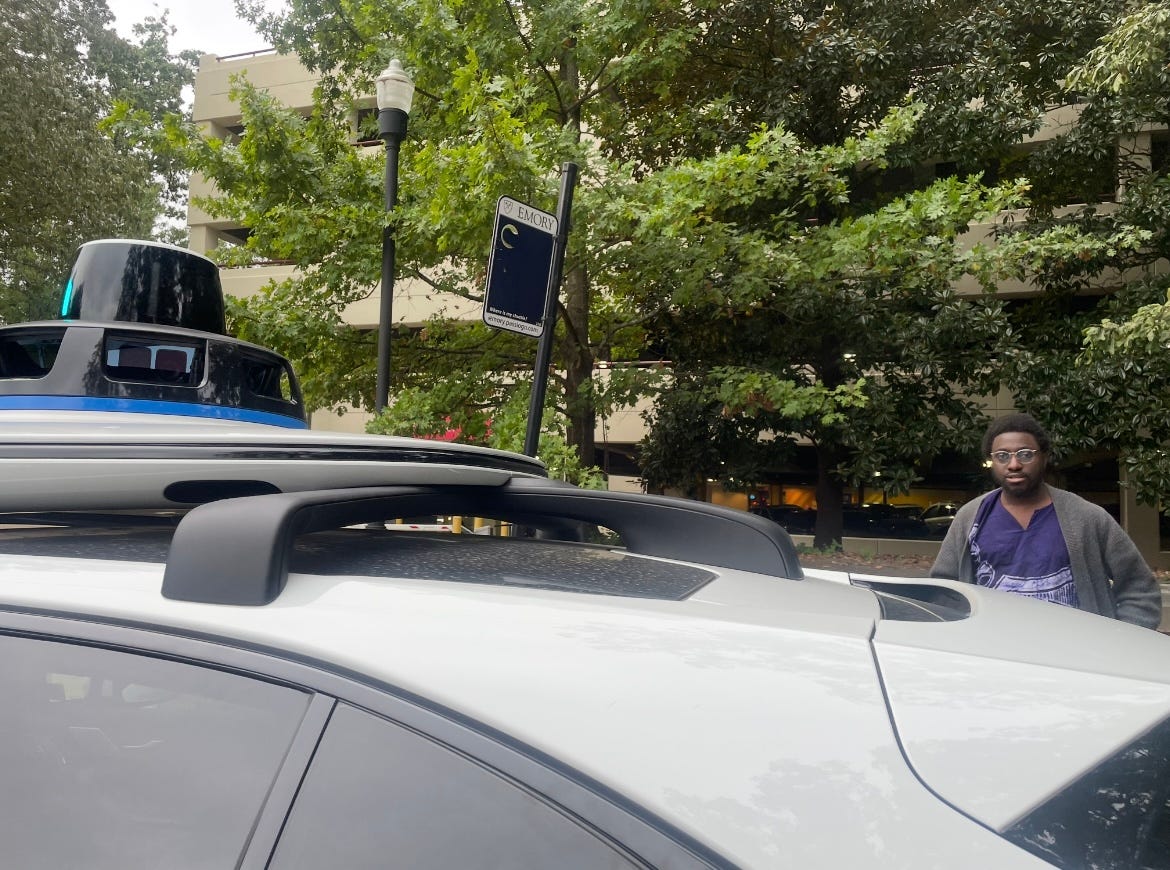
I took my first Waymo ride this fall, and one of my first thoughts was something along the lines of “Jeez, the stuff is too good, how the hell are humans supposed to compete.” The drive, right in the middle of Atlanta, was too smooth and very cozy. I came to the conclusion that humans should probably be driving less, then I looked up the data. Boy, was it good.
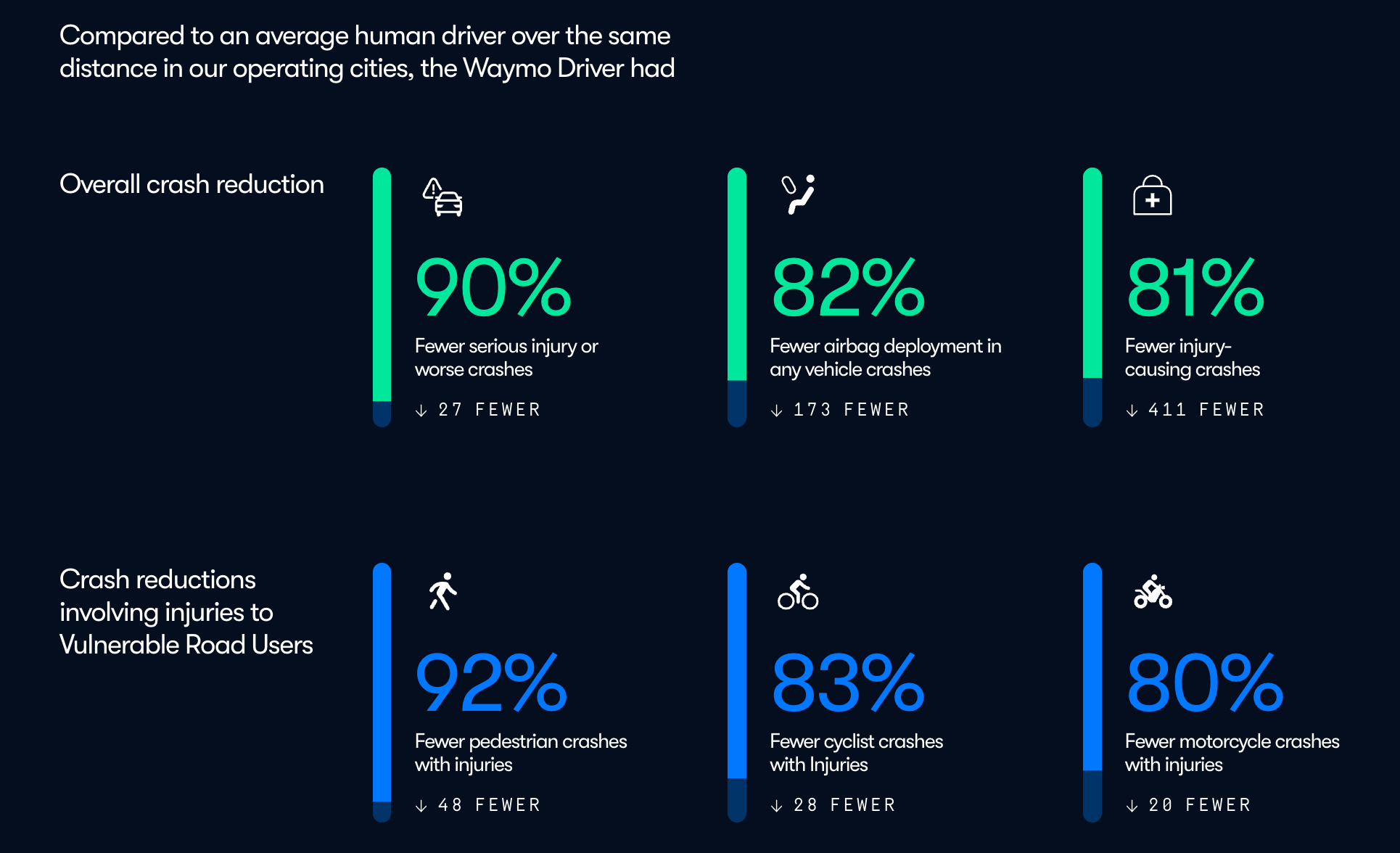
You can find more of the safety data in the Waymo Safety Report.
In this New York Times opinion essay, a neurosurgeon effectively argued that the adoption of autonomous vehicles is a public health imperative:
If Waymo’s results are indicative of the broader future of autonomous vehicles, we may be on the path to eliminating traffic deaths as a leading cause of mortality in the United States. While many see this as a tech story, I view it as a public health breakthrough.
There’s a public health imperative to quickly expand the adoption of autonomous vehicles. More than 39,000 Americans died in motor vehicle crashes last year, more than homicide, plane crashes and natural disasters combined. Crashes are the No. 2 cause of death for children and young adults. But death is only part of the story. These crashes are also the leading cause of spinal cord injury. We surgeons see the aftermath of the 10,000 crash victims who come to emergency rooms every day. The combined economic and quality-of-life toll exceeds $1 trillion annually, more than the entire U.S. military or Medicare budget.
ℹ️Connection Among Information, Intelligence and Decision
I have always enjoyed reading Dembski’s essay on his many critiques of materialism in biology/life.
Here, he argues that information, intelligence, and decision are intrinsically linked by the fundamental act of “ruling out possibilities.” He argues that information is a top-down process where specific outcomes are realized to the exclusion of others, which mirrors the etymology of both intelligence (inter-legere, to choose between) and decision (decidere, to cut off). By defining the creation of information as a discriminatory act of choosing one path over countless others, Dembski contends that the “selection” observed in the biological world is not a byproduct of blind forces.
As a side note, this brief etymological tour reveals that Darwin’s great coup was to coopt the term selection, previously associated with the conscious choice of purposive agents, and combine it with the term natural as a way of negating the role of such intelligent agency. In the term natural selection, Darwin therefore attempted to recover all the benefits of choice as traditionally conceived, and yet without requiring the services of an actual intelligence. Thus to this day we read such claims, as by Francisco Ayala, that Darwin’s greatest discovery was to give us “design without designer.” Likewise, Richard Dawkins describes Darwin’s great coup as explaining the appearance of design in the absence of actual design.
And what about microevolution? If I am not wrong, I believe, elsewhere, Dembski reconciles the aforementioned argument with natural selection & microevolution by framing them as “subtractive” rather than creative mechanisms. Natural selection clearly generates information by weeding out the unfit, he argues that this process merely filters pre-existing genetic data without generating new Complex Specified Information. Blind evolutionary forces can fine-tune existing biological structures (microevolution), but they lack the decision-making capacity required to conceptualize and build them from scratch, say.
🔔 Double Pendulum Aren’t Chaotic
This excellent video essay challenges the popular notion that double pendulums are inherently chaotic by visualizing their behavior through “phase space” fractals (geometric maps). While admitting that many starting positions lead to unpredictable, divergent motion (chaos), the creator demonstrates that specific initial conditions (particular angles or momentum levels) result in stable, repeating patterns like “pretzels,” “hearts,” or Lissajous curves.
By mapping these behaviors in such beautiful motions, the video reveals “islands of stability” hidden within chaotic regions and observes that while low-energy starts are typically stable and medium-energy ones chaotic, ultra-high momentum starts can surprisingly reintroduce order, proving the system contains pockets of beauty and predictability amidst the disorder.
I was reminded of Nassim Taleb’s “Barbell Strategy” take in one of his books, after watching the video, which advocates for operating at the extremes while avoiding the “muddled middle.” Taleb suggests allocating resources to either hyper-safe assets (stability) or/and hyper-aggressive bets (high variance but high potential) to avoid the hidden fragility of “moderate” risk. I think some “law of everything,” might be hiding here in plain sight.
👴🏻The Common Sense of John Searle
I have been interested in some contentious (philosophy) subject matter that had eventually led me to read about some of John Searle’s work, chief among them would be the nature of the intelligence in artificial intelligence, and free will.
Ed Feser wrote this short synopsis of some of Searle’s work, after he passed away in September.
On AI:
Imagine that Searle, who knows no Chinese, sits in a room with a set of Chinese symbols and a rulebook in English telling him which combinations of symbols to give out in response to written questions slipped to him through a slot in the door. The rulebook does not tell him what the symbols mean; it simply allows him to mimic the behavior of a person who does. What Searle would be doing in this scenario, he argued, is essentially what a computer does: manipulating symbols according to the rules of an algorithm. The resulting mimicry, no matter how convincing, would not yield genuine understanding of Chinese. Likewise, what computers do can never amount to the operations of true intelligence, but only a simulation of it.
(also see this nice TED animation on the Chinese room thought experiment)
On free will
…He argued against the idea that our actions are the necessitated effects of mental events of which we are merely the passive observers—as if everything we think and do simply happened to us. Choice, of its very nature, involves an irreducible and persisting self, which actively brings things about as a result of deliberation. There is a causal gap between our beliefs and desires on one hand and our behavior on the other, and only the self can fill that gap, by way of its agency. Searle’s view is that whether or not we can strictly prove the reality of freedom, we have no intelligible model of human action without it.
On his metaphysics:
The main weakness of Searle’s work is that he never developed a metaphysics that was as carefully worked out as his anthropology. Searle’s materialist critics often accused him of being a dualist in the Cartesian mold, a charge he always denied. He was as committed as the materialists were to the thesis that the natural world is all there is. He simply thought their way of fitting human beings into that world was simplistic. The trouble is that the conception of nature he shared with them, which he never seriously questioned, makes his position unstable. When he emphasized the continuity of human beings with the larger natural world, he sometimes sounded like he was offering just another riff on materialism. But when (as was more often the case) he emphasized how radically different the human mind is from everything else in nature, the charge of dualism was hard to rebut.
[Books/Papers 📚]
Books I recently completed:
Ultralearning by Scott Young [Review]
Stillness is the Key [Review]
Secrets of Sand Hill Road [Review]

Reshuffle: Who wins when AI re stacks the knowledge economy [Review] (I plan to publish an essay about the ideas in the book early next year.)
What I am currently reading:
Hatching Twitter: A True Story of Money, Power, Friendship, and Betrayal by Nick Bilton
Shoe Dog: A Memoir by the Creator of Nike by Phil Knight
Google’s Introduction to Agents.
Thanks for writing this, it clarifies a lot. Your AI newsletter is always so interesting and essential reading! How do you manage to find so many fascinanting links, really?