

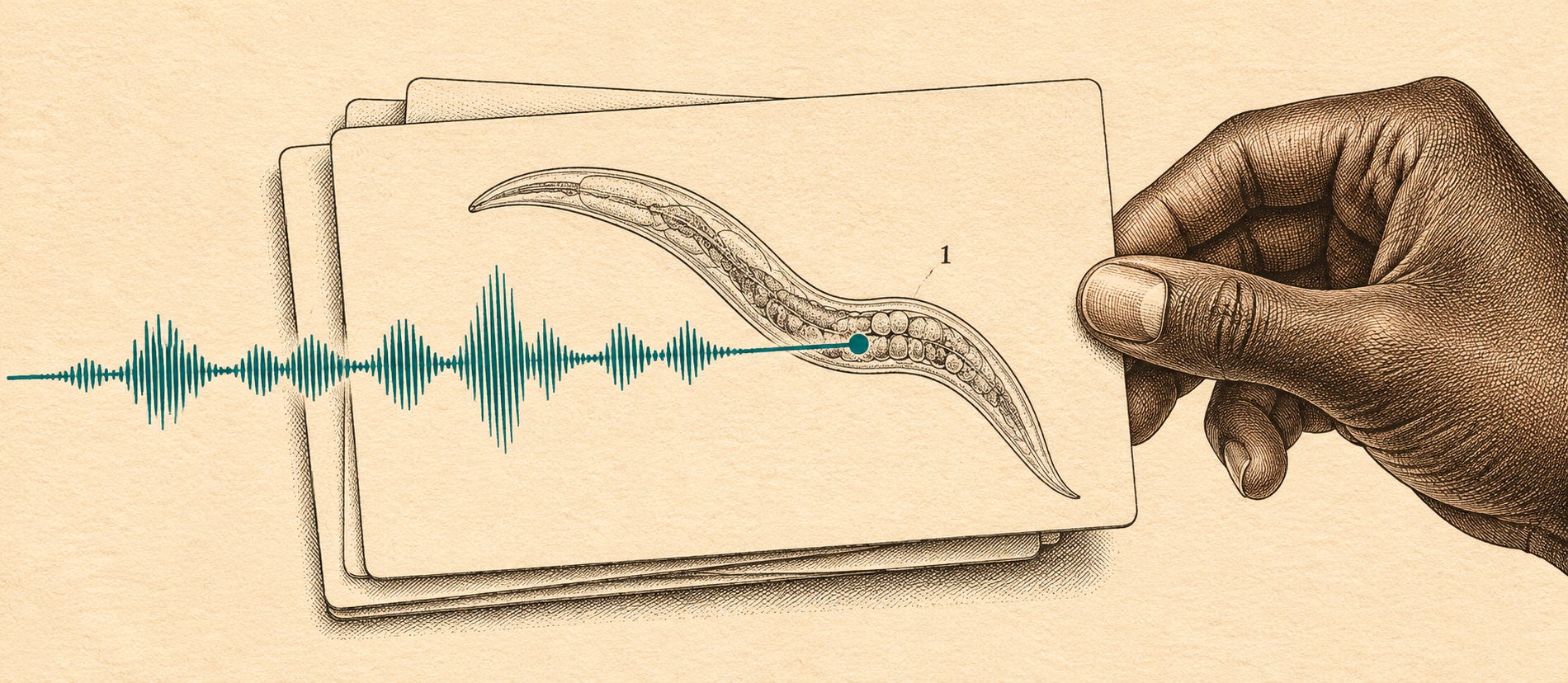
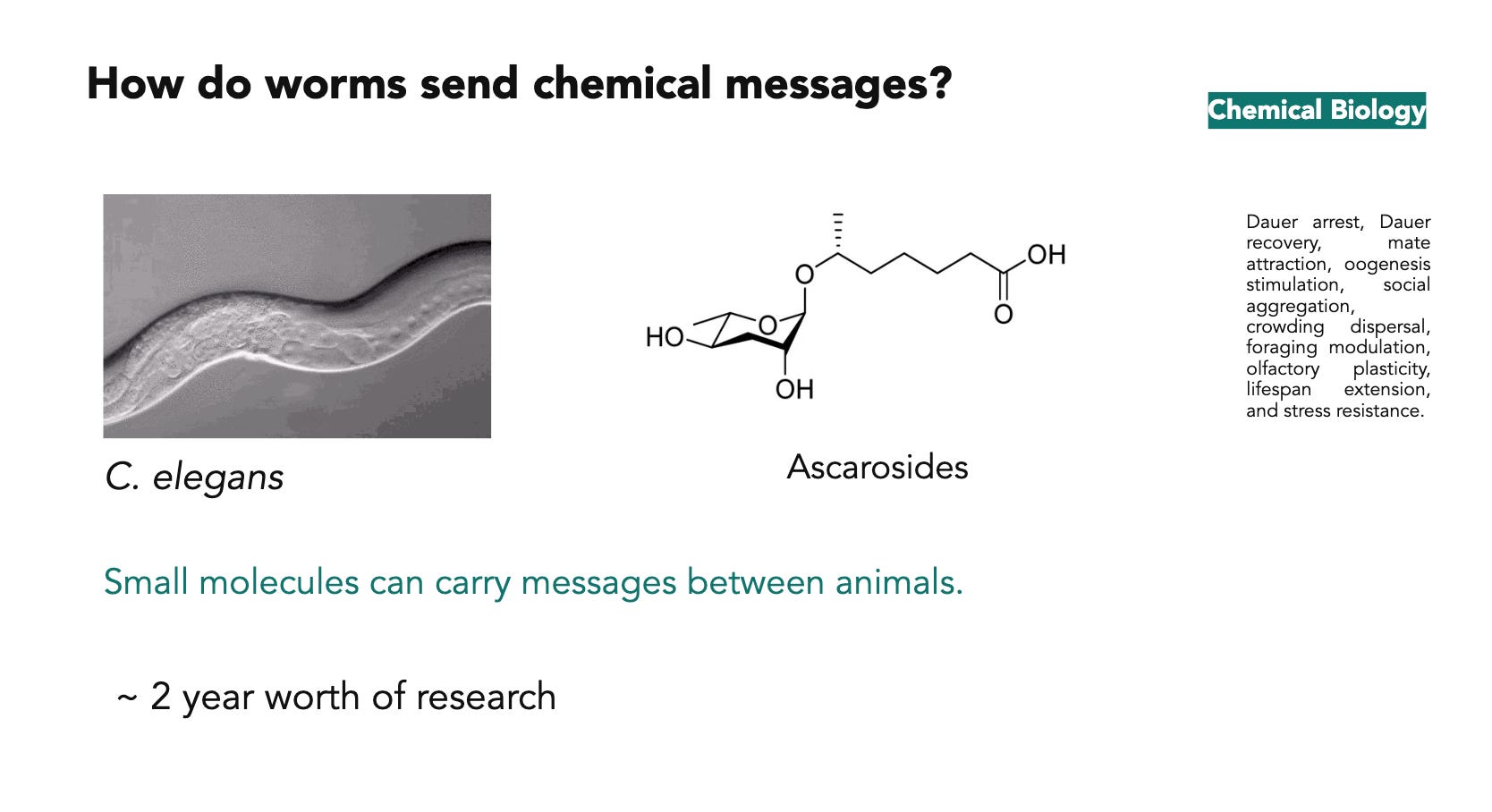
Suppose you missed the talks I gave last week, and I sent you my slides. On slide 13 you would meet a worm. If you are the patient type, just from the slides, you should be able to learn that worms can communicate with each other, much like humans, by sending one another chemical messages (ascarosides). And that I spent roughly the first two years in my PhD program studying how they make them.
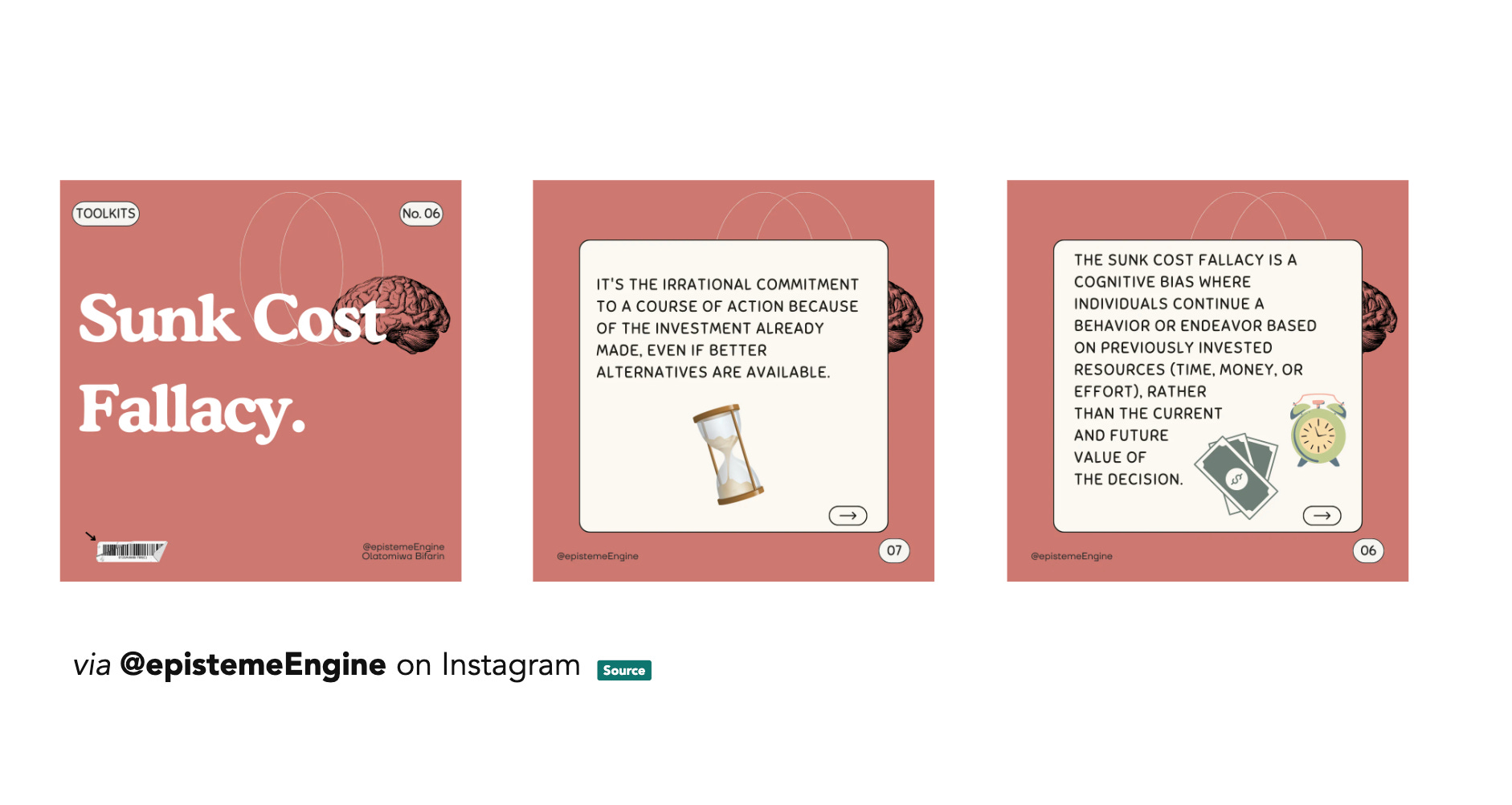
What might be harder to reconstruct is why I stopped. I wanted to keep going partly because I had already spent two years on the problem and my committee encouraged me to call it a day. The slides make a good reminder if you heard me tell that story during the talk. Otherwise, that’s quite a lot to ask of a video of a worm. (My next slide was on sunk cost fallacy, but admittedly, without context, that would do little to share much light.)
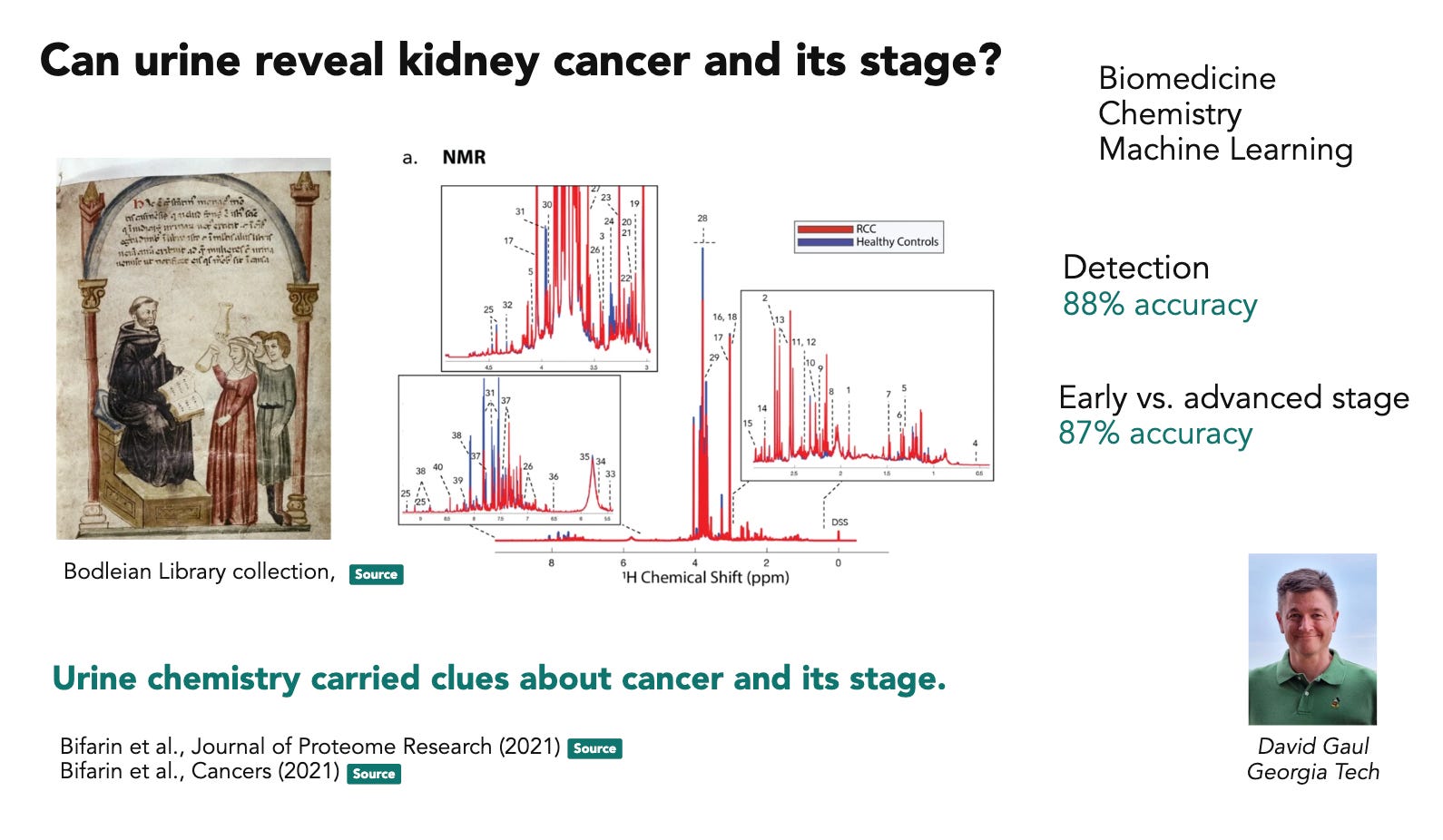
Now, a YouTube recording would do that story justice. You could hear me tell it, and I could send you to the right minute. Now suppose what caught your attention was our work on kidney cancer. You pause the video at a figure and decide you would like to read the paper. There are two citations at the bottom of the frame. Which one goes with the result I just mentioned? I know the little ritual of enlarging a slide and typing half a paper title into a search box. Or if you are in luck, you could hurry to the show notes and find a blurb of text and links to swift through. If all else fail, you can send the youtube link to Gemini and ask away.
For my latest talk Science in Motion, I tried what I have come to call a narrated slide essay. Each slide has its own web address. Open a slide and you get the figures, my voice (narration), an edited transcript and papers referenced. You can press play at the beginning and let me take you all the way from urine tasting to AI in the lab. (This experimental version only works best on your desktop, images are not coherent on smaller screens, so I would check it out on a larger screen).
In 2007, Alan Levine used SlideShare’s Slidecasts to synchronize an MP3 with slides he had put together for a workshop. A present-day cousin is another product also named Slidecast, which lets you share narrated slides that people can go through at their own pace. I thought, too, of the Stripe Press web edition of Poor Charlie’s Almanack. I can read one of Charlie Munger’s talks, follow him down a digression, then head for the reading list. I wanted that freedom for somebody looking at a single figure from my talk.
I have come to think of a web link to one of these slides as a way of quoting a talk. Because the highlights are timed to my voice, you can still see what I am pointing to as I speak. The transcript and sources travel with the slide, too. You can send someone a single slide much as you might send them a paragraph from an essay. My explanation goes with it. And if they want to know how I got there, they can follow the whole talk from the beginning.
That’s why I use the word essay. I have put the slides in a particular order because, together, they make an argument. Where you come in, and how long you stay, is up to you. I like the idea that somebody can borrow me for a minute to explain one figure, then go and check my work.
You can listen to the talk here: https://www.bifarin.me/talks/2026-11-21-science-in-motion/ (again, works best on your desktop).