

[Talking Points]
GTA 6 Extended Gameplay
Guide to a flourishing life.
Sonny Liston’s death.
Welcome back to the 80s (AI rendition)
Every Given Sunday.
Robots building houses.
Undercover Human Trafficking Route from Nigeria to Libya.
The Shift from Coding Syntax to Systems Design.
One Leader We Can All Look Up To.
Breaking Bad: Best Show of the 21st century.
Give your iPhone a home.
On Hyperbolic Emojis.
Nigeria vs. Bulgaria 94 World Cup.
Affording America.
Luke Burguis X Tyler Cowen.
The All Souls Exam (possible link)
The peaceful dissolution of Nigeria.
Reverse Engineering Without CAD.
1 in 2 people will experience a mental health issue.
The Wes Huff affair.
[Longer Reads/Watch]
You Can’t Speedrun Yourself

In this excellent essay, Alex Chalmers explores how AI changes our relationship with effort and excellence, arguing that delegating the grind of execution (could) ultimately robs practitioners of deep understanding and genuine human judgment; drawing inspiration from medieval monks. Hard to argue with the logic:
“...But this radical increase in agency might come at the cost of understanding. This is a difficult thing to acquire and it’s easy to fool yourself into thinking you have it. The difficulty arises when there is no independent test of whether the result is good. One AI system can critique the output of another, but both are drawing on the similar sets of inherited patterns and assumptions. Understanding is what lets practitioners judge plausible answers, their underlying assumptions, or when a new approach is needed. This is why the separation between practice and outcome is inherently unstable. You may be able to fool most of the people most of the time, but eventually, the edge cases will catch up with you.”
The Celebrity Priest that Couldn’t be Bought.

Nice documentary about Fulton Sheen. He was one of the first sets of folks I listened to when I was learning more about Catholicism. At the peak (of his reach) in the 1950s, His Life Is Worth Living program reached an estimated 30 million television viewers weekly (see one of his episodes here on reading), while his radio program, The Catholic Hour, attracted around four million listeners per broadcast. He also won an Emmy for Most Outstanding Television Personality and appeared on TIME’s cover. He was beautified by the church on September 24, here is the beautification mass, homily by Cardinal Tagle (See transcript)
“To preach the Gospel from a posture of self-righteousness that prevents you from empathizing with other people’s brokenness is not mission; it is not blessedness.”
The Mechanical World Picture

In examining what defined the “mechanical world picture” of early modern science, Edward Feser points out that finding a single positive definition (whether as clockwork machines, push-pull physical mechanisms, anti-animism, or Dijksterhuis’s thesis of pure mathematization) consistently runs into historical counterexamples like Newtonian gravity. Instead, Feser argues that the core of the mechanical philosophy was primarily negative:
“it is not surprising that it should prove difficult to find a precise and generally accepted definition. The reason, I would suggest, is that from the beginning, the aim and content of the mechanical world picture has been more negative than positive. It is more about what it is against than what it is for. And what it is against is Aristotelianism.
In particular, I would suggest, the idea of giving mechanistic explanations of natural phenomena was always fundamentally about finding ways to make them intelligible without reference to anything like substantial forms, intrinsic teleology, and related ideas in Aristotelian philosophy of nature. The point was to replace this with an approach that was simpler and allowed for the prediction, control, and technological exploitation of natural phenomena. The other themes described above were natural consequences of this.”
How to Understand Things
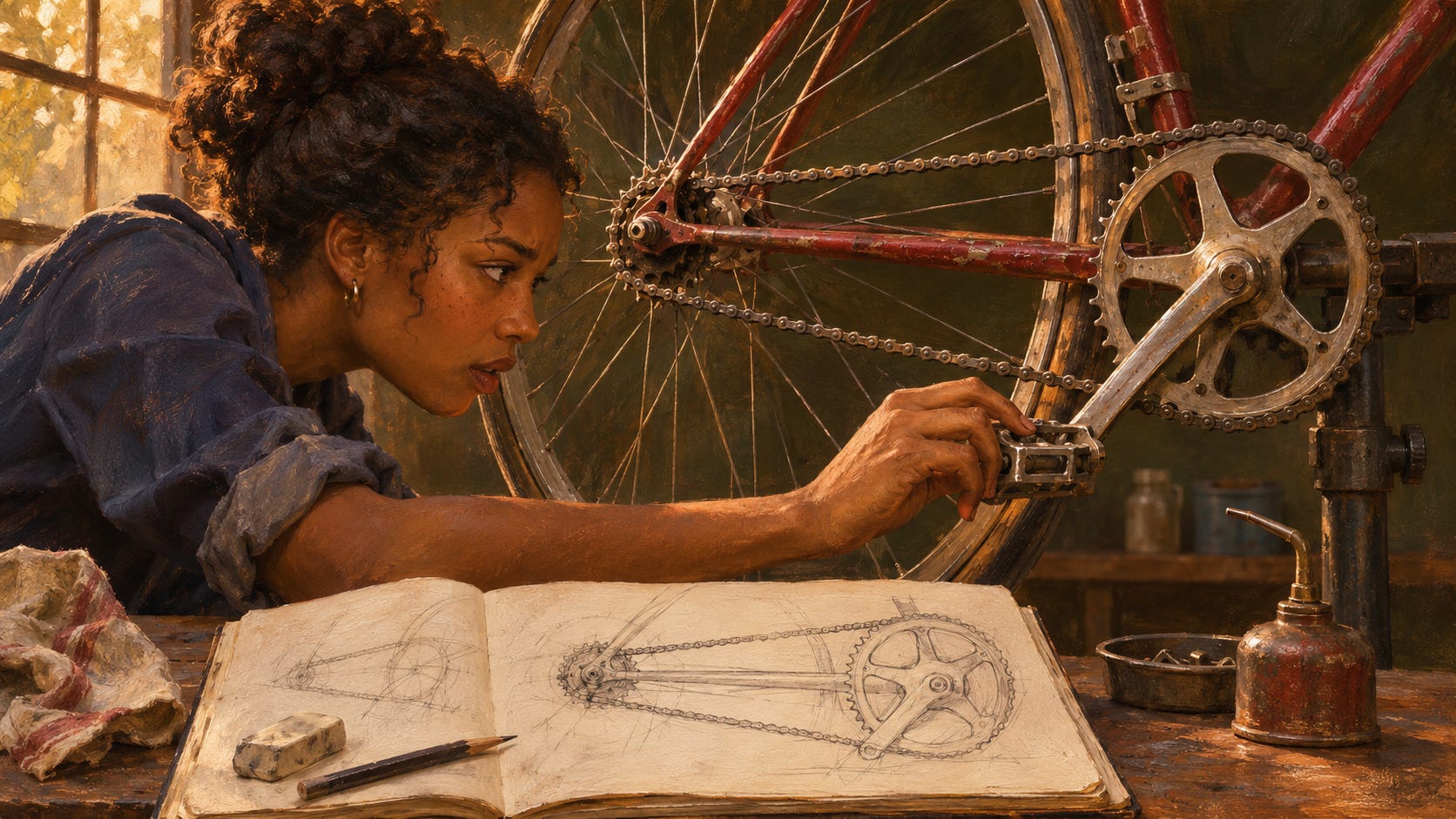
Fine essay by Nabeel Qureshi from 2020. It explores the deep, intentional mechanics of comprehension, arguing that true understanding is a continuous pursuit of intellectual clarity that requires active engagement, physical intuition, and the honesty to question one’s own assumptions rather than relying on superficial narratives or rote memorization.
I think there is a real real irony at play here, one that is only going to sharpen over time because of AI. On one hand, machine intelligence can accelerate comprehension; it’s basically an engine capable of answering almost any question, at any time, to deepen your grasp of any subject. On the other hand, that same capability drives an explosion of cheap media and bad books that makes it harder than ever to slow down and truly understand things a la tiktok, IG, YouTube. We are moving towards an era of abundance (and some other things): you can amplify your intelligence and build ambitious things if you can direct the models. But the irony is that all of this leverage still hinges on one simple requirement: you actually have to understand things.
Progress, Power, and the Antichrist
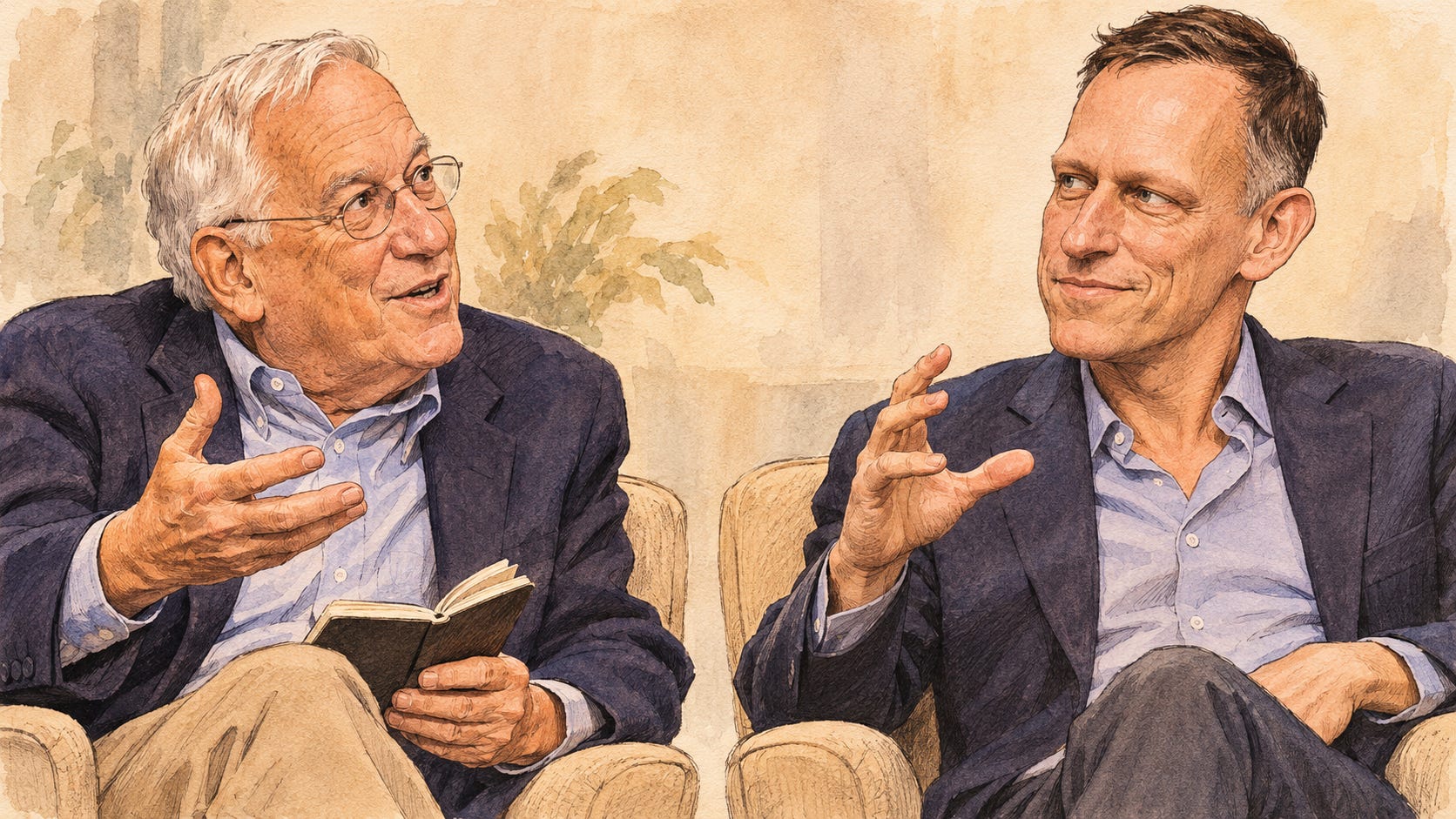
Interesting conversation between Walter Isaacson and Peter Thiel on The Builders. They move from AI and economic stagnation to René Girard, the Antichrist, and the people we are trusting to build what comes next. Thiel argues that slowing technological progress carries risks of its own: weaker growth, fewer opportunities, and a more bitter contest over what remains. His hope is that AI helps restart progress in the physical world, especially medicine.
The Antichrist discussion becomes a bit clearer once he explains it. His concern is that fear of catastrophe could make us accept an all-powerful global authority in exchange for safety. Isaacson keeps bringing the conversation back to a different concentration of power: the founders already deciding how these technologies develop.
There is a real tension here. Thiel is wary of giving bureaucracies control over the future, but is much more forgiving of the extraordinary individuals building it. Those individuals may be very good at making things happen. Whether they should have so much say over what happens to everyone else is another question. Worth listening to.